

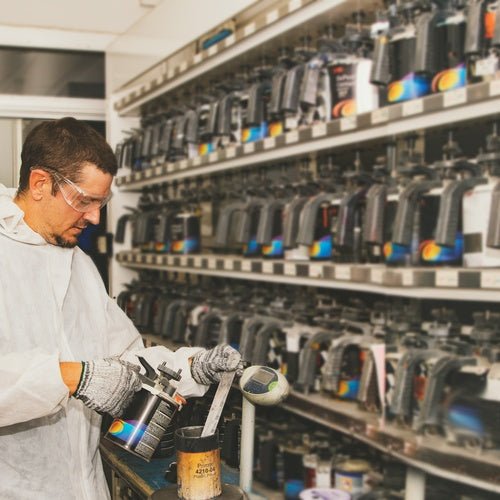
When working on automotive painting or other industrial projects, the choice of the right solvent is crucial for achieving a flawless finish. Lacquer thinner and enamel reducer are two common solvents, each with a unique purpose and application. Understanding the differences between lacquer thinners and enamel reducers can help you select the most appropriate product for your work to achieve professional results.
What Is Lacquer Thinner?
Lacquer thinner is a solvent mixture commonly used to thin lacquer-based paints. It’s a composition of powerful chemicals such as acetone, toluene, xylene, and methyl ethyl ketone (MEK). These ingredients make it highly effective at dissolving materials and cleaning surfaces, but they also contribute to its strong odor and fast evaporation rate.
The primary use of lacquer thinner is to thin paints before application, making it easier to spray or apply evenly. It is ideal for cleaning brushes, removing dried paint, or dissolving adhesives. Its fast-drying characteristic is a distinct advantage when working on projects that require quick completion times. However, its potency demands careful handling, as it can damage certain surfaces or pose health risks if not used in well-ventilated areas.

What Is Enamel Reducer?
Enamel reducer, on the other hand, works with enamel-based paints. Unlike lacquer thinner, it’s formulated to be less volatile, allowing for a slower evaporation process. This characteristic is vital for delivering a smooth, even coat without imperfections such as bubbling or cracking.
Enamel reducer’s slow evaporation rate also makes it suitable for larger projects that require precision and durability. It helps the paint flow evenly and adhere properly to the surface, resulting in a long-lasting finish. Professional painters prefer enamel reducer for automotive and industrial projects that demand durable finishes.
What Are the Key Differences Between Lacquer Thinner and Enamel Reducer?
The most significant difference between lacquer thinner and enamel reducer lies in their compatibility and evaporation rates. Lacquer thinner is highly volatile and works specifically with lacquers, while enamel reducer evaporates more slowly and pairs with enamel-based paints. These differences influence how each product performs and under what conditions it should be used.
Lacquer thinner’s rapid evaporation makes it ideal for projects with tight deadlines, as it dries quickly and allows for faster layering. However, this same characteristic can make it less forgiving when it comes to applying it, as poor application technique can lead to uneven finishes. Enamel reducer, due to its controlled drying process, provides painters with more time to work on achieving precision, making it the preferred choice for certain detailed projects.
Another important distinction is their chemical composition. The aggressive nature of lacquer thinner makes it highly effective for removing tough residues like dried paint or adhesives, whereas enamel reducer thins enamel paints and enhances their flow and adhesion.
Which One Should You Choose?
When deciding between lacquer thinner and enamel reducer, it’s essential to consider the nature of your project. If you’re working with lacquers, such as in furniture finishing or woodworking, lacquer thinner is the go-to choice. Its aggressive properties make it perfect not only for thinning lacquer but also for cleaning tools and surfaces after completing the task.
For projects involving automotive painting or other applications that use enamel paint, enamel reducer offers better performance. Its slower evaporation rate ensures that each coat of paint is even and durable, which is critical for achieving a long-lasting finish on vehicles or equipment.
It’s also worth consulting the manufacturer’s instructions for your specific paint product; these guidelines often provide clear recommendations on the type of solvent to use. Using the correct solvent from the outset can save time, money, and frustration by reducing the likelihood of common problems such as bubbling, cracking, or uneven finishes.
What Are the Environmental Considerations?
Both lacquer thinner and enamel reducer have environmental implications that you should not overlook. Lacquer thinner, due to its strong chemical composition, can emit high levels of volatile organic compounds (VOCs), which contribute to air pollution. Proper disposal and adherence to safety guidelines are critical when using this solvent.
Enamel reducers typically emit fewer VOCs, but they are not entirely free from environmental impacts. Using eco-friendly alternatives or low-VOC formulations, when available, is a more sustainable approach for professionals and hobbyists alike. Regardless of which solvent you choose, always prioritize safety by working in well-ventilated areas and avoiding prolonged exposure to fumes.
What Are the Health Impacts?
As mentioned, both products contain volatile organic compounds (VOCs) and harsh chemicals like toluene, xylene, acetone, and methyl ethyl ketone. These are not only harmful to the environment but can also pose a risk to your own health if you do not take proper safety precautions.
Inhalation of fumes is one of the most common risks. Prolonged or repeated exposure can lead to symptoms such as headaches, dizziness, nausea, and irritation of the eyes, nose, and throat. In more severe cases, exposure may contribute to respiratory issues, central nervous system effects, or organ damage over time.
Skin contact with these solvents can cause dryness, irritation, or even chemical burns with heavy or prolonged exposure. Accidental splashes to the eyes are especially dangerous and can result in significant irritation or vision impairment.
To minimize health risks, always work in a well-ventilated area or use appropriate respiratory protection. Wear gloves, goggles, and protective clothing to reduce skin and eye exposure. Store chemicals in properly labeled containers and keep them away from sources of ignition, as both lacquer thinner and enamel reducers are highly flammable.

Find the Best Product for You
Understanding the differences between lacquer thinner and enamel reducer ensures you select the right solvent for professional results. Both solvents thin paint effectively, but their distinct properties make them suited for different projects. Use lacquer thinner for fast-drying lacquer finishes and enamel reducer for durable, precision enamel applications.
These solvents can help you achieve excellent results when you use them correctly; however, the importance of safety and proper disposal cannot be overstated. Keep in mind the specific requirements of your paint product and the nature of your project to make an informed choice. By doing so, you’ll not only save time and materials but also ensure a high-quality finish that stands the test of time.
If you need high-quality automotive thinners, we can help you out. At Eagle National, we have a wide variety for you to choose from. Whatever your needs may be, we’re here to provide you with the best thinners in the industry.